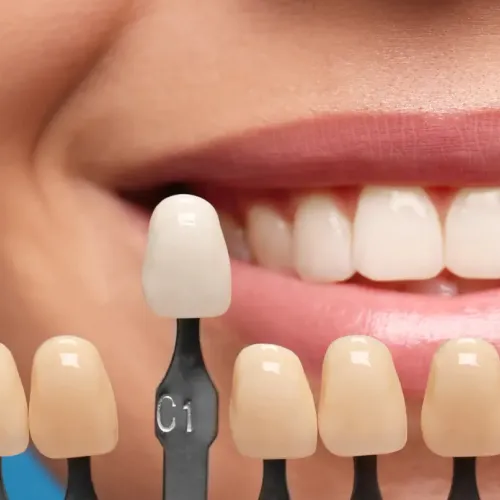
Can Teeth Rot Under Veneers? What No-Prep and Traditional Veneers Actually Do to Your Enamel
Can teeth rot under veneers? Learn how no-prep and traditional veneers affect enamel and how proper care can help protect your teeth.
Read More

Restorative Dentistry
Medically Reviewed by Frank Wolf, DDS
Most fillings last 7–15 years depending on material, but lifespan alone doesn't tell the whole story. The real question is whether your filling is still protecting your tooth — or quietly working against it.
Most people think of filling replacement as a simple swap — old out, new in. For Tucson-area patients, it is important to understand that every replacement enlarges the cavity. The original tooth structure removed for decay never grows back, and each subsequent drilling takes a little more with it.
This is why I talk with patients about the filling-to-tooth ratio. When a filling occupies more than roughly 50% of a tooth's width, the remaining natural walls become thin and vulnerable. At that point, a new filling doesn't restore the tooth — it hollows it further. Those thin walls can snap under normal chewing forces, sometimes resulting in a vertical fracture that can't be saved with a crown.
That's the moment I recommend moving to a dental crown instead of a fifth or sixth filling. It's not upselling. It's preventing a catastrophic split that ends in extraction.
Signs a filling has structurally "outgrown" itself:
According to Cleveland Clinic, inlays and onlays exist precisely for this transition zone — when a tooth has too much damage for a filling but not enough for a full crown.
Patients often notice a dark line or shadow near an old filling and assume it's coffee or tea staining. Sometimes it is. But sometimes it's something far more serious, and the distinction matters enormously.
Extrinsic staining sits on the surface of a filling. It's caused by pigmented foods and drinks and can often be polished away at a cleaning. No urgency there.
Marginal leakage is different. It shows up as a dark "halo" — a shadow that appears under the edge of a white composite filling, or a spreading gray-brown ring around an older amalgam. This happens when the seal between filling and tooth breaks down, allowing bacteria to seep underneath. That's secondary decay forming in a place you can't brush.
How to tell the difference at home:
If you see that halo effect, don't wait for your next cleaning. A Healthline overview of cavity fillings confirms that decay around a filling is one of the primary reasons restorations fail — and catching it early is the difference between a new filling and a root canal.
The "should I replace my silver fillings?" question almost always goes straight to mercury safety or aesthetics. Those are legitimate topics, but there's a mechanical reason that gets overlooked far too often.
Amalgam is a metal. Metal expands when heated and contracts when cooled — every time you drink hot coffee or eat ice cream. Over 20 or 30 years, this repeated thermal cycling creates microscopic internal pressure inside the tooth. Because amalgam doesn't chemically bond to tooth structure (it sits mechanically locked in the cavity), it acts more like a wedge than a patch.
Over decades, that wedge effect can generate enough internal force to propagate micro-fractures outward through the surrounding enamel. In worst-case scenarios, this results in a vertical root fracture — the kind that splits the tooth in half and requires extraction, not restoration. If you'd like to understand more about when teeth cannot be saved, a guide to tooth extractions in Tucson AZ covers what that process involves.
This isn't a reason to panic about every amalgam filling you have. The American Dental Association maintains that amalgam remains safe and effective, and existing fillings in good condition generally shouldn't be removed preemptively. But if your metal filling is showing cracks, if surrounding enamel has visible fracture lines, or if you feel sharp pain when releasing bite pressure — those are mechanical warning signs worth evaluating, independent of any toxicity debate.
For reference, a systematic review published in PMC found amalgam restorations had median survival times exceeding 16 years compared to 11 years for composite — but fracture of the surrounding tooth was the primary reason amalgam restorations ultimately failed.
Here's a practical breakdown by material:
Amalgam (silver) ~ 15 years
Composite (tooth-colored) ~ 7–11 years
Ceramic/porcelain ~ 15 years
Gold ~ 20+ years
Glass ionomer ~ 5 years
But lifespan numbers only go so far. WebMD's dental fillings guide notes that location of decay, chewing forces, and individual habits all affect how long any specific filling survives. Patients who grind their teeth, consume highly acidic diets, or skip routine prophylaxis cleanings will consistently fall below the average — regardless of material.
The most honest answer I give patients: a filling lasts until it doesn't protect the tooth anymore. That's a clinical judgment made with X-rays and probing, not a calendar.
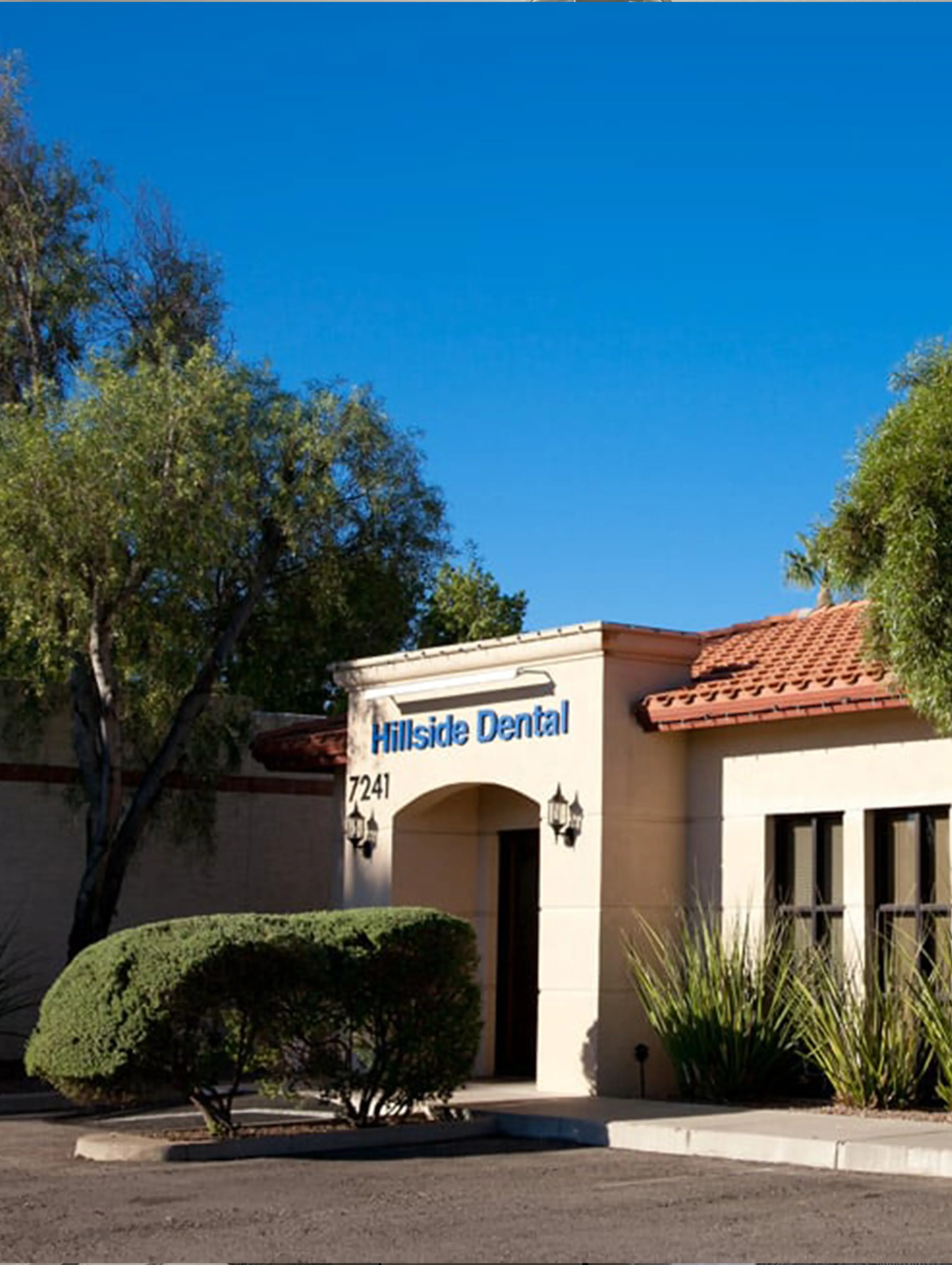
If you've been wondering whether your old fillings are still doing their job — or if you've noticed sensitivity, staining, or dark shadows around a restoration — I'd encourage you to come in for an evaluation. At Hillside Dental Care in Tucson, I take a conservative, patient-centered approach to every restorative decision. My goal is always to preserve as much natural tooth structure as possible, and when fillings are no longer enough, we can discover the many uses of dental crowns to find the right path forward. Serving patients throughout Southern Arizona, we're here when you're ready.
Medical disclaimer: This article is intended for general informational purposes only and does not constitute professional dental or medical advice. Always consult a licensed dental professional regarding your specific oral health needs.





Tucson, AZ PREMIER DENTISTRY
Monday - Thu 8a - 3p
Fri - Sun Closed
7241 North Thornydale Rd
Tucson, AZ 85741
YOUR NEW DENTISTS IN Tucson
Check out what our patients are saying













EMERGENCY DENTAL CARE Tucson, AZ
Upholding the highest standards of dental excellence through our esteemed accreditations and industry affiliations

DENTAL CARE TEAM Tucson, AZ
OUR SOCIALS
Check us out and follow our accounts on the following social media platforms