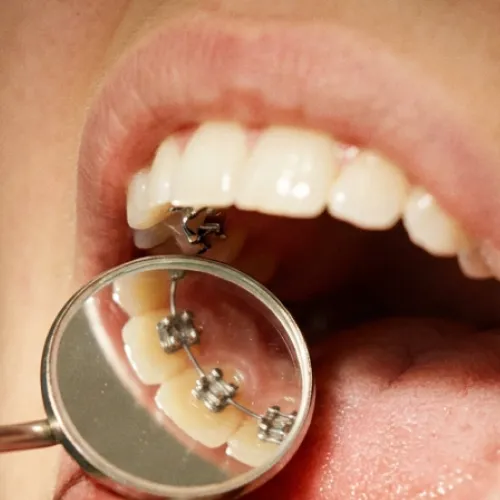
Lingual Braces: Why Fewer People Get Them (And Whether They're Right for You)
Curious about lingual braces? Discover why fewer people choose them, how long treatment takes, and if they're right for your smile. Book a consult today!
Read More

Specialty Dentistry
Medically Reviewed by Dr. Frank Wolf, DDS
Gum contouring and gingivectomy are closely related but not identical — the right choice depends on how much tissue needs to be removed and whether bone is involved. Understanding the biological limits of these procedures helps you ask better questions before committing to treatment.
Many patients arrive expecting a straightforward "gum trim" and leave surprised by the complexity involved. The reason often comes down to something called biological width.
Biological width refers to the roughly 2–3mm of tissue — epithelial and connective — that naturally attaches between the base of your gum line and the underlying jawbone. Research published in PMC confirms that achieving approximately 4.5mm of supra-alveolar tooth structure is essential for long-term restorative success, and violating that biological attachment triggers the body's defense response.
What does that mean practically? If a dentist removes too much gum tissue and encroaches on that protected zone, your body will work to re-establish it — often through chronic inflammation, bone resorption, or gum recession. The result can be sensitivity, instability, or the very aesthetic problem you were trying to fix.
For Tucson-area patients, candidacy for gum reshaping isn't simply about how much gum is visible. Your dentist needs X-rays and a thorough clinical examination to measure the actual distance between your gum margin and the alveolar bone crest. Patients with adequate attached gingiva above that threshold are strong candidates. Those without enough may need a more involved procedure — or be advised against contouring altogether. If you're also exploring ways to enhance your smile with cosmetic dentistry, understanding these biological limits is an essential first step.
The takeaway: "more gum removal" isn't always possible. Biological width is a hard physiological limit, not a preference.
Here's a distinction that most general articles skip entirely — and it has real implications for how your treatment gets categorized.
A true gummy smile involves excess gum tissue relative to the bone. But a significant number of patients have what periodontists call pseudo-pockets: gum tissue that appears overgrown but is actually sitting in a false pocket created by inflammation, medication side effects, or incomplete gum recession after orthodontic treatment.
According to WebMD, certain prescription medications can cause gum tissue to overgrow around teeth — a condition known as gingival hyperplasia. Patients coming off braces frequently see the same effect from plaque accumulation around brackets.
In pseudo-pocket cases, removing that tissue isn't cosmetic in the traditional sense — it's restoring normal gingival architecture and eliminating a bacterial harbor. That distinction matters when it comes to how the procedure is coded and submitted to insurance. What looks like elective "gum contouring" on the surface may qualify as a periodontal gingivectomy when pseudo-pockets are present and documented. Patients who assume they'll pay full out-of-pocket may find partial coverage available when a periodontist properly documents the clinical necessity.
If your gums became noticeably "puffier" during or after orthodontic treatment, or you take medications for blood pressure or seizures, bring this up at your consultation. It changes the clinical picture significantly. Staying current with routine prophylaxis cleanings is also important for managing the inflammation that can contribute to pseudo-pocket formation.
The terms "gum contouring" and "gingivectomy" are used interchangeably in many places, but there's a meaningful procedural difference — especially in how your recovery unfolds.
A traditional scalpel gingivectomy involves cutting away gum tissue with a blade, which typically requires sutures and carries a higher likelihood of post-operative bleeding. A Healthline overview of gingivectomy notes that recovery involves several days of soreness and a protective dressing placed over the surgical site.
Laser gum contouring works differently. The laser uses concentrated thermal energy to vaporize excess tissue while simultaneously cauterizing blood vessels and nerve endings on contact. Healthline's gum contouring guide describes the procedure as typically completable in one to two hours, with patients remaining awake under local anesthesia and often returning to normal activity quickly. Patients who feel anxious about dental procedures may want to explore sedation dentistry as an option to stay comfortable throughout treatment.
The practical difference for patients:
Neither approach is universally superior — the extent of tissue removal and whether bone is involved will determine which is appropriate. Laser contouring handles mild to moderate reshaping well. More extensive cases involving bone recontouring (true crown lengthening) still require surgical techniques that go beyond what a soft-tissue laser addresses. In some crown lengthening cases, a dental crown may subsequently be placed to restore and protect the exposed tooth structure.
Framing this as a competition misses the point. These procedures exist on a clinical spectrum, and the right choice is driven entirely by what's causing the problem.
For patients with mild to moderate excess soft tissue, adequate attached gingiva, and no bone involvement, laser gum contouring offers a minimally invasive path with fast recovery and lasting results. According to Healthline's gummy smile overview, results from gingivectomy-style procedures are typically long-lasting or permanent when the underlying cause is addressed. Some patients also find that veneers are suitable as a complementary option once gum architecture has been corrected, helping to refine the final appearance of the smile.
For patients whose gummy appearance stems from skeletal structure, short clinical crowns, or deep tissue issues, crown lengthening or more complex periodontal surgery will be necessary — and contouring alone won't hold.
The most important step isn't choosing a procedure. It's getting a proper diagnosis that distinguishes between soft tissue excess, pseudo-pockets, biological width constraints, and skeletal causes. Each has a different treatment path.
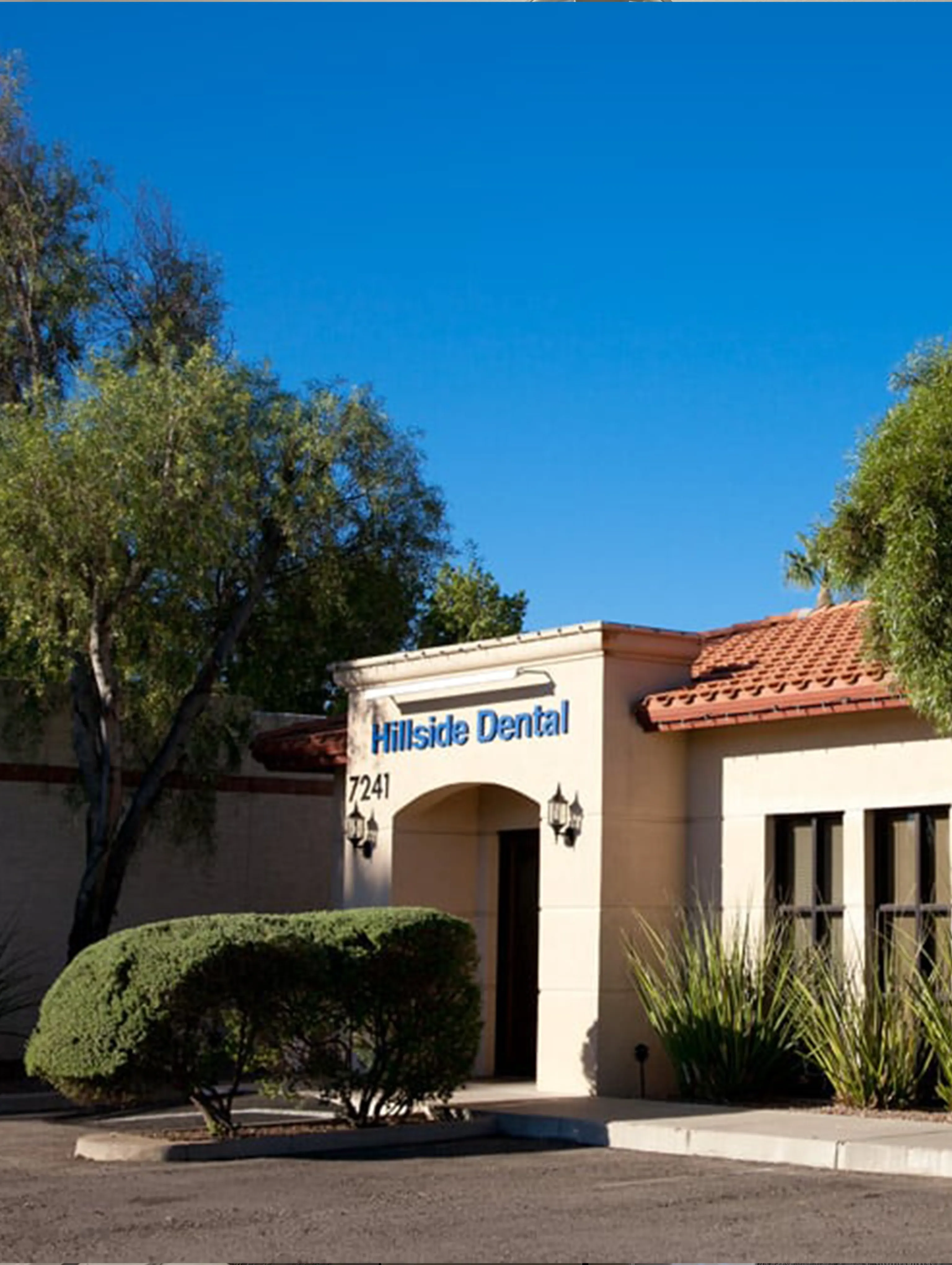
If you're in the Tucson area and wondering whether gum contouring, gingivectomy, or another approach fits your smile goals, Hillside Dental Care offers comprehensive consultations to evaluate your gum health and discuss the right path forward. You can also discover ways to improve your smile with cosmetic dentistry to explore the full range of treatments available. Our team serves patients across Southern Arizona with personalized, evidence-based treatment planning.
Medical disclaimer: This article is intended for informational purposes only and does not constitute professional dental or medical advice. Always consult a licensed dental professional for diagnosis and treatment recommendations specific to your situation.


Tucson, AZ PREMIER DENTISTRY
Monday - Thu 8a - 3p
Fri - Sun Closed
7241 North Thornydale Rd
Tucson, AZ 85741
YOUR NEW DENTISTS IN Tucson
Check out what our patients are saying













EMERGENCY DENTAL CARE Tucson, AZ
Upholding the highest standards of dental excellence through our esteemed accreditations and industry affiliations

DENTAL CARE TEAM Tucson, AZ
OUR SOCIALS
Check us out and follow our accounts on the following social media platforms