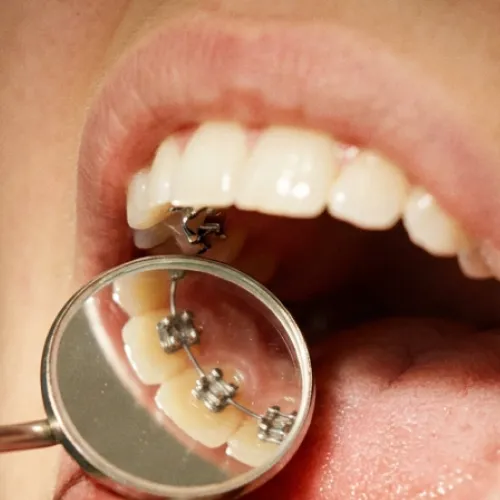
Lingual Braces: Why Fewer People Get Them (And Whether They're Right for You)
Curious about lingual braces? Discover why fewer people choose them, how long treatment takes, and if they're right for your smile. Book a consult today!
Read More
Restorative Dentistry
Medically Reviewed by Dr. Frank Wolf, DDS
Yes, dental implants require a surgical procedure — but most patients are surprised by how manageable the discomfort is. Recovery involves a predictable healing arc, and understanding what's actually happening beneath the gums helps set realistic expectations before you commit.
Before I explain the surgery itself, I want to address something most patients only discover after the procedure — and it catches people off guard. For Tucson-area patients considering this restoration, the sensory shift is significant.
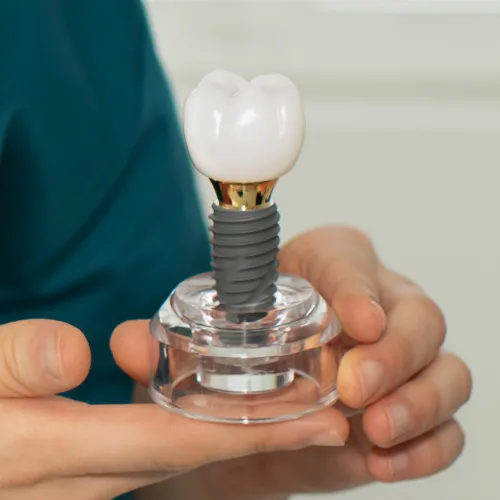
Your natural teeth are anchored by a periodontal ligament (PDL), a network of tiny fibers that acts as both a shock absorber and a sensory system. That ligament tells your brain exactly how much pressure you're applying when you bite down on an olive pit versus a grape. A dental implant has no PDL. It fuses directly to your jawbone through a process called osseointegration — a tight, rigid bond between titanium and bone.
What this means practically: your implant crown will feel slightly "mechanical" when you bite. There's no cushioning, no micro-feedback. Most patients describe it as biting on something that just feels solid in a way that's unfamiliar. If you'd like to understand more about how crowns work alongside implants, our guide to dental crowns in Tucson, AZ covers the topic in depth.
This isn't a defect. It's physics. According to Cleveland Clinic, implants work much like natural teeth once healed — but "like" is doing some work in that sentence.
Your brain will recalibrate, typically within the first three months of normal chewing. During that window, I advise patients to be deliberate: chew slowly on the implant side, avoid very hard foods, and stay conscious of bite force. Over-biting during early loading can stress the restoration before osseointegration is fully complete.
The adaptation is real, and it happens. But knowing it's coming makes the transition far less unsettling.
As Mayo Clinic explains, dental implant surgery replaces the tooth root with a metal post, then supports an artificial crown. That's the standard description. What it doesn't capture is that how the surgery is performed significantly shapes how you feel during the days that follow.
There are two primary surgical approaches:
Traditional flap surgery involves cutting the gum tissue, folding it back to expose the jawbone, drilling the implant site, and suturing the tissue closed. This is thorough and well-established, but it creates more tissue trauma. Expect swelling, some bruising, and stitches. Most patients manage post-operative discomfort with over-the-counter NSAIDs for three to five days.
Computer-guided flapless surgery uses 3D cone-beam CT imaging and a digitally designed surgical stent to place the implant through a small punch-hole incision — no flap, no sutures in many cases. Research published in PMC confirms that guided flapless surgery produces comparable implant survival rates to conventional surgery while reducing soft tissue trauma.
The practical difference? Guided surgery patients often return to normal activity the next day with noticeably less swelling. If minimizing recovery time matters to you, this is the question to ask your surgeon: "Are you using guided, flapless technique for my case?" Not every anatomy qualifies — bone volume and implant position matter — but it's worth the conversation.
At my practice in Tucson, I lean toward guided placement whenever the anatomy supports it, especially for patients who carry significant dental anxiety. If anxiety is a concern for you, it may help to learn more about sedation dentistry in Tucson, AZ before your consultation. Less trauma means a calmer recovery, and a calmer recovery means better long-term confidence in the process.
This is the question I hear most. The honest answer: less than most patients expect, and considerably less than a tooth extraction.
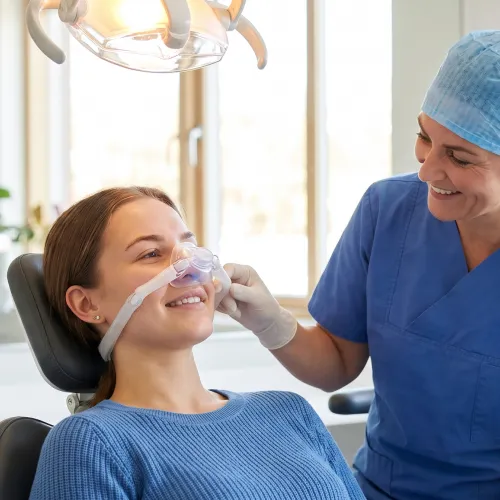
During the procedure itself, you won't feel pain. Local anesthesia numbs the surgical site completely. For anxious patients, sedation options are available. A Healthline overview on dental implant pain confirms that pain during surgery shouldn't occur with proper anesthesia, though some pressure sensation is normal.
Post-operative discomfort is real but typically mild. Peak pain occurs around the 24-hour mark, then gradually decreases. Most patients need analgesics for one to two days. Swelling and jaw stiffness may linger seven to ten days, but these are manageable. WebMD's oral surgery recovery guide recommends icing the jaw in 30-minute intervals during the first 24 hours and sticking to cool, soft foods. For a deeper look at what drives oral discomfort, our article on causes and relief for tooth pain in Tucson, AZ offers helpful context.
One functional side effect that rarely gets mentioned: speech disruption. When a healing abutment is placed or a temporary "flipper" tooth fills the gap, your tongue suddenly has new architecture to navigate. Sibilant sounds — "S," "T," "Th" — may whistle or lisp for 48 to 72 hours. This is temporary and neurological, not structural.
A simple protocol helps: spend 10 to 15 minutes reading aloud twice daily in the first two days after abutment placement. Focus on words with "s" and "st" sounds. The tongue adapts quickly when given deliberate practice. Most patients find their speech normalizes within three to four days without any intervention — but active reading aloud accelerates the process noticeably.
The full implant process takes time. Healthline's benefits overview puts the total treatment window at six to twelve months. Here's what that actually means in practice:
Days 1–3: Peak discomfort and swelling. Rest, ice, soft foods, and prescribed or OTC pain management. Avoid straws and smoking — both disrupt clot formation.
Days 4–14: Swelling resolves. Gum tissue begins closing around the implant. Most patients resume normal activity by day two or three.
Weeks 2–12: The quiet phase. Osseointegration is underway — your jawbone is actively growing around and fusing to the titanium post. You won't feel this happening, but it's the most critical stage. This is also when the proprioception recalibration I described earlier begins. Keeping up with routine prophylaxis cleanings during this period is especially important for protecting the healing site.
Months 3–6: Abutment placement and crown fitting. By this point, osseointegration should be complete. Your final restoration is attached, and you begin chewing normally. Patients who have experienced significant tooth loss may also want to explore dentures in Tucson, AZ as a complementary or alternative option depending on their individual needs.
The investment in time is real. But long-term implant survival rates — reported by PMC research at above 97% over ten years — reflect a procedure that, when done correctly, lasts a lifetime.
If you've been sitting with questions about implants — whether the surgery is right for you, what your recovery might look like, or how to manage anxiety through the process — I'd encourage you to have that conversation in person. You may also find it useful to discover ways to improve your smile with cosmetic dentistry to understand the full range of options available to you.
At Hillside Dental Care, we work with patients across the Tucson area who want honest, unhurried answers before committing to any procedure. Implants are one of the most life-changing treatments we offer — and the decision deserves a thorough conversation, not a rushed consultation.
Medical disclaimer: This article is intended for informational purposes only and does not constitute professional medical or dental advice. Please consult a licensed dental professional for diagnosis and treatment recommendations specific to your situation.


Tucson, AZ PREMIER DENTISTRY
Monday - Thu 8a - 3p
Fri - Sun Closed
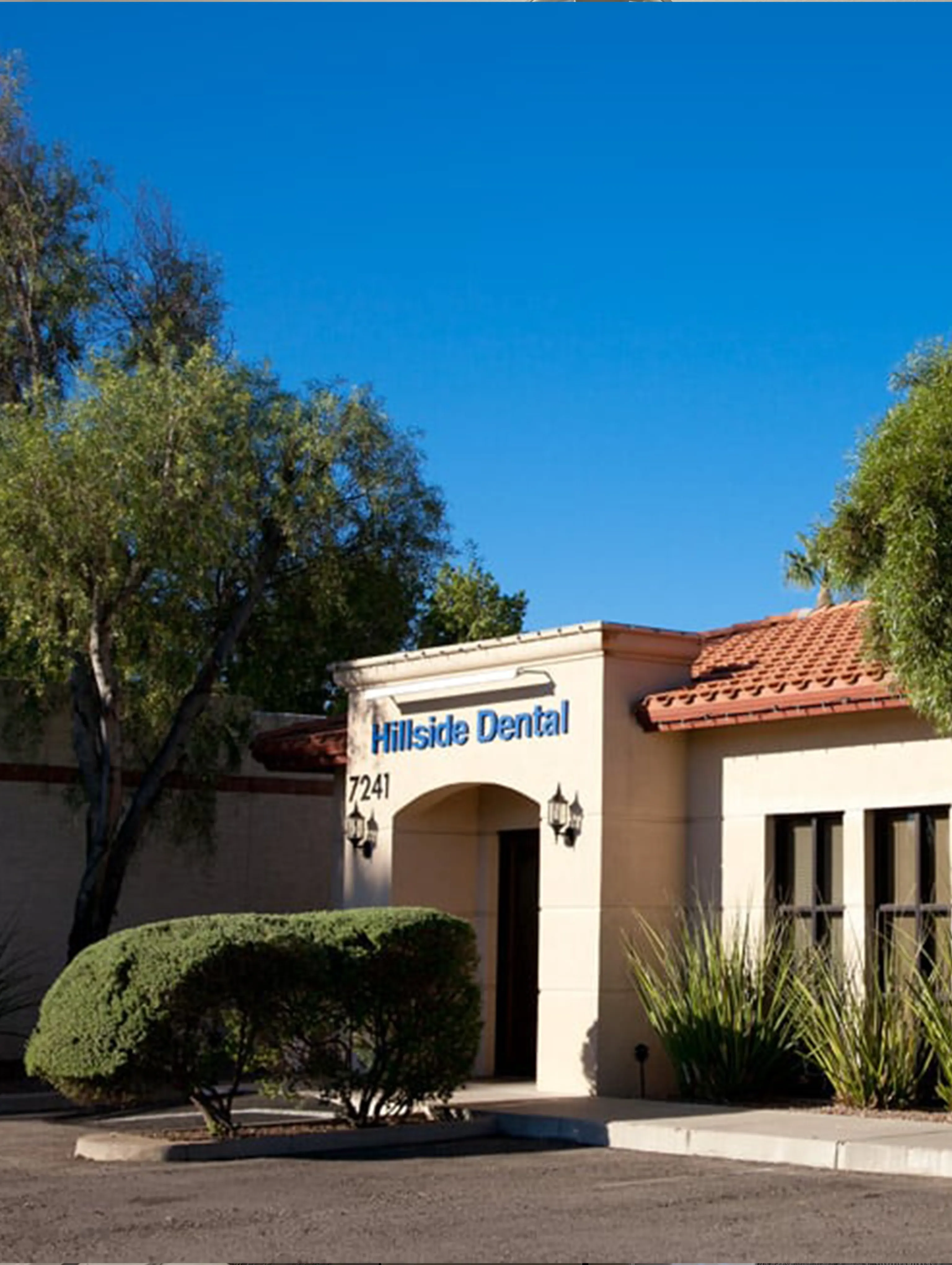
7241 North Thornydale Rd
Tucson, AZ 85741
YOUR NEW DENTISTS IN Tucson
Check out what our patients are saying













EMERGENCY DENTAL CARE Tucson, AZ
Upholding the highest standards of dental excellence through our esteemed accreditations and industry affiliations

DENTAL CARE TEAM Tucson, AZ
OUR SOCIALS
Check us out and follow our accounts on the following social media platforms