Medically Reviewed by Frank Wolf, DDS
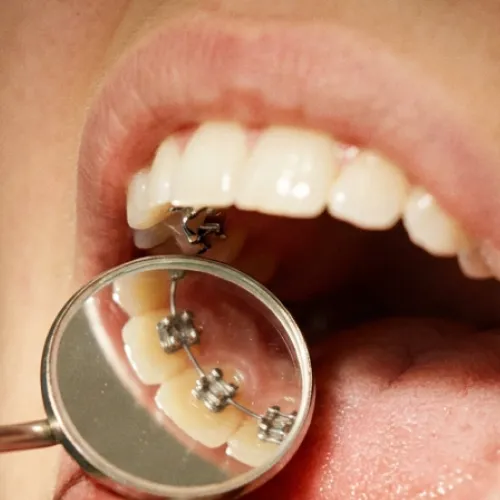
Lingual braces hide behind your teeth for a nearly invisible look, but they come with real trade-offs — from tongue discomfort to logistical complications that most comparison articles skip entirely. This guide covers the clinical differences, candidacy factors, and a few surprising realities that could change your decision.
When Chewing Becomes the First Obstacle: Deep Bites, Bite Turbos, and What Nobody Warns You About
Most adults exploring lingual braces focus on aesthetics. What they don't expect is a conversation about temporarily losing the ability to chew solid food. If you're also considering ways to enhance your smile with cosmetic dentistry, it's worth understanding all your options before committing to any single path.
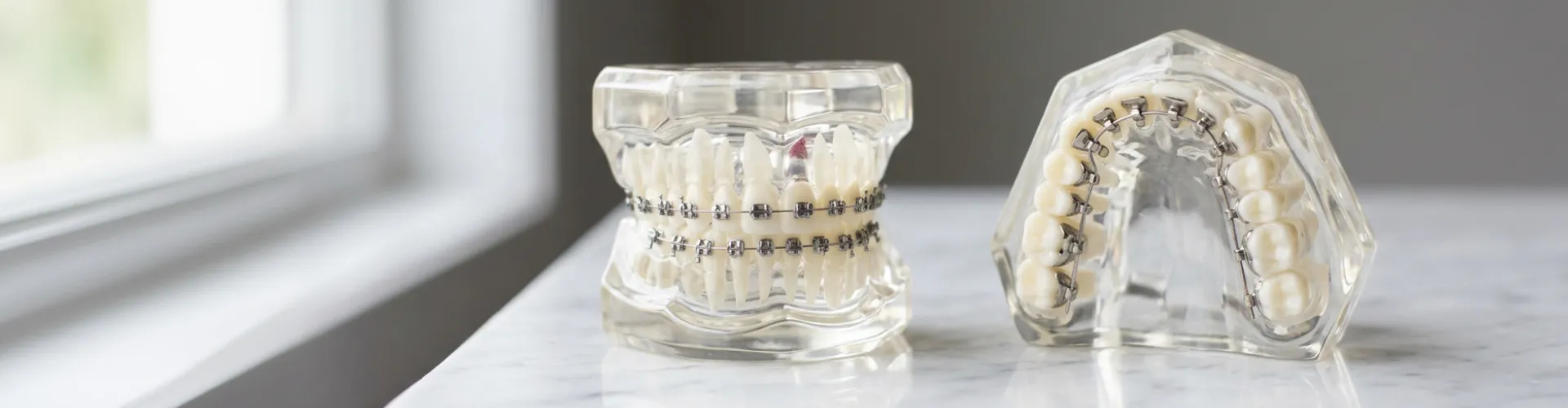
If you have a deep overbite — where your upper front teeth heavily overlap the lower ones — you may be a borderline candidate for lingual braces. The reason is mechanical: when you close your mouth, your upper teeth can literally clip and knock off the lower lingual brackets. To prevent this, orthodontists bond small composite "bite blocks" (called bite turbos) behind the upper front teeth.
These bite turbos prop your jaw slightly open, preventing your back molars from fully meeting. For two to six weeks, chewing solid food becomes physically difficult. Soft foods — yogurt, mashed potatoes, scrambled eggs, smoothies — become your diet by necessity, not by choice.
This isn't a rare complication. It's standard protocol for deep-bite patients in lingual treatment. Before committing, ask your orthodontist directly: Do I need bite turbos? How long? What can I realistically eat?
WebMD's overview of lingual braces notes that eating difficulties are one of the primary adjustment challenges — and for deep-bite patients, that window is significantly longer than average.
Understanding this upfront matters, especially for working adults with demanding schedules who can't afford weeks of dietary disruption without warning.
Who Is Not a Good Candidate for Lingual Braces?
Lingual braces aren't the right fit for everyone, and candidacy goes beyond bite depth.
Severe deep overbites are the most common structural contraindication — as discussed above, brackets on the lower teeth become collision targets. Very small teeth create a bonding surface problem; there simply isn't enough lingual enamel to hold a bracket securely. In some cases where tooth structure is compromised, patients may also want to explore options like dental crowns as part of a broader treatment plan.
Speech sensitivity is another real factor. Because lingual brackets sit against the tongue, they predictably affect articulation. Research published in PMC found that lingual orthodontic patients were significantly more likely to experience speech difficulty compared to those with conventional labial braces — a meaningful consideration for professionals who present publicly, teach, or work in client-facing roles.
Patients on bisphosphonate medications — commonly prescribed for osteopenia or osteoporosis — face a separate clinical concern. Orthodontic tooth movement depends on active bone remodeling: osteoclasts break down bone ahead of the moving tooth, while osteoblasts rebuild it behind. Bisphosphonates (like alendronate or risedronate) suppress this turnover. For post-menopausal women — a significant demographic drawn to discreet lingual treatment — this can slow tooth movement unpredictably or, in rare cases, contribute to medication-related osteonecrosis of the jaw under sustained orthodontic pressure. A conversation with both your prescribing physician and orthodontist before starting treatment is essential.
Patients with significant crowding or complex bite issues may also find that conventional braces or clear aligners offer more predictable outcomes. Not every malocclusion responds equally well to lingual mechanics. Patients who experience tooth pain during orthodontic evaluation should also have underlying causes addressed before beginning any treatment.
The Transferability Problem: What Happens If You Move Mid-Treatment?
This is one of the most overlooked risks of choosing a proprietary lingual system — and it matters enormously for adults with careers that involve relocation.
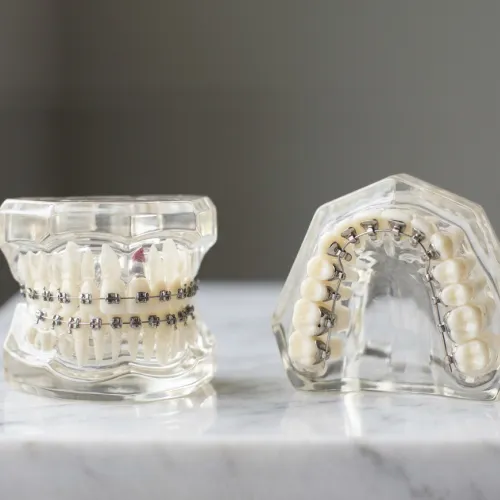
Traditional metal braces use standardized, near-universal brackets. If you move from Tucson to another city mid-treatment, almost any general orthodontist can pick up where your previous provider left off. The system is interoperable.
Lingual braces are different. Systems like Incognito or InBrace are CAD/CAM-designed, custom-fabricated to your specific tooth anatomy. If you relocate, you cannot simply transfer to any local orthodontist. You need a provider certified in that exact proprietary system who is also willing to accept a mid-progress case — a combination that can be genuinely difficult to find.
The financial consequence of a failed transfer can be significant: removal of the existing system, a new diagnostic workup, and restarting treatment from scratch. Before signing a treatment contract, ask specifically: Is this system transferable? What is your protocol if I need to relocate? Are there certified providers in the cities I might move to?
A Healthline overview of lingual braces notes that the customization that makes lingual systems effective is the same feature that drives up complexity and limits flexibility — a trade-off worth understanding before you begin.
Clear Aligners, Traditional Braces, or Lingual: How Do They Actually Compare for Adults?
For most adults, the decision comes down to three practical dimensions: aesthetics, compliance demands, and clinical effectiveness.
Aesthetics — Lingual braces and clear aligners both offer near-invisibility. Traditional metal braces are the most visible. Ceramic braces fall in between. A Healthline article on adult braces notes that for adults, aesthetics consistently ranks as the primary consideration — above treatment speed and even comfort. Adults who want to address additional cosmetic concerns alongside orthodontic treatment may also want to learn whether veneers are suitable for everyone as a complementary option.
Compliance — Clear aligners require 20–22 hours of daily wear. Lingual and traditional braces are fixed, so compliance with wearing the appliance isn't a variable. However, a randomized trial cited on PubMed found that clear aligner patients reported 80% high comfort ratings versus 60% for lingual braces, with compliance rates of 92% and 85% respectively — suggesting fixed appliances carry their own adherence challenges around appointments and maintenance. Maintaining routine prophylaxis cleanings is especially important during any orthodontic treatment to protect gum health and enamel.
Effectiveness — For complex tooth movements, traditional braces remain the most predictable system. Lingual braces can achieve comparable results in skilled hands, but they require orthodontists with specialized training. Clear aligners excel in mild-to-moderate cases but may underperform for significant rotations or vertical movements.
For adults in Tucson weighing these options, the honest answer is: there's no universal winner. The best choice depends on your bite complexity, lifestyle, occupation, and how your body responds to treatment — including any medications you're taking that affect bone metabolism.
Ready to Find Out Which Option Fits You?
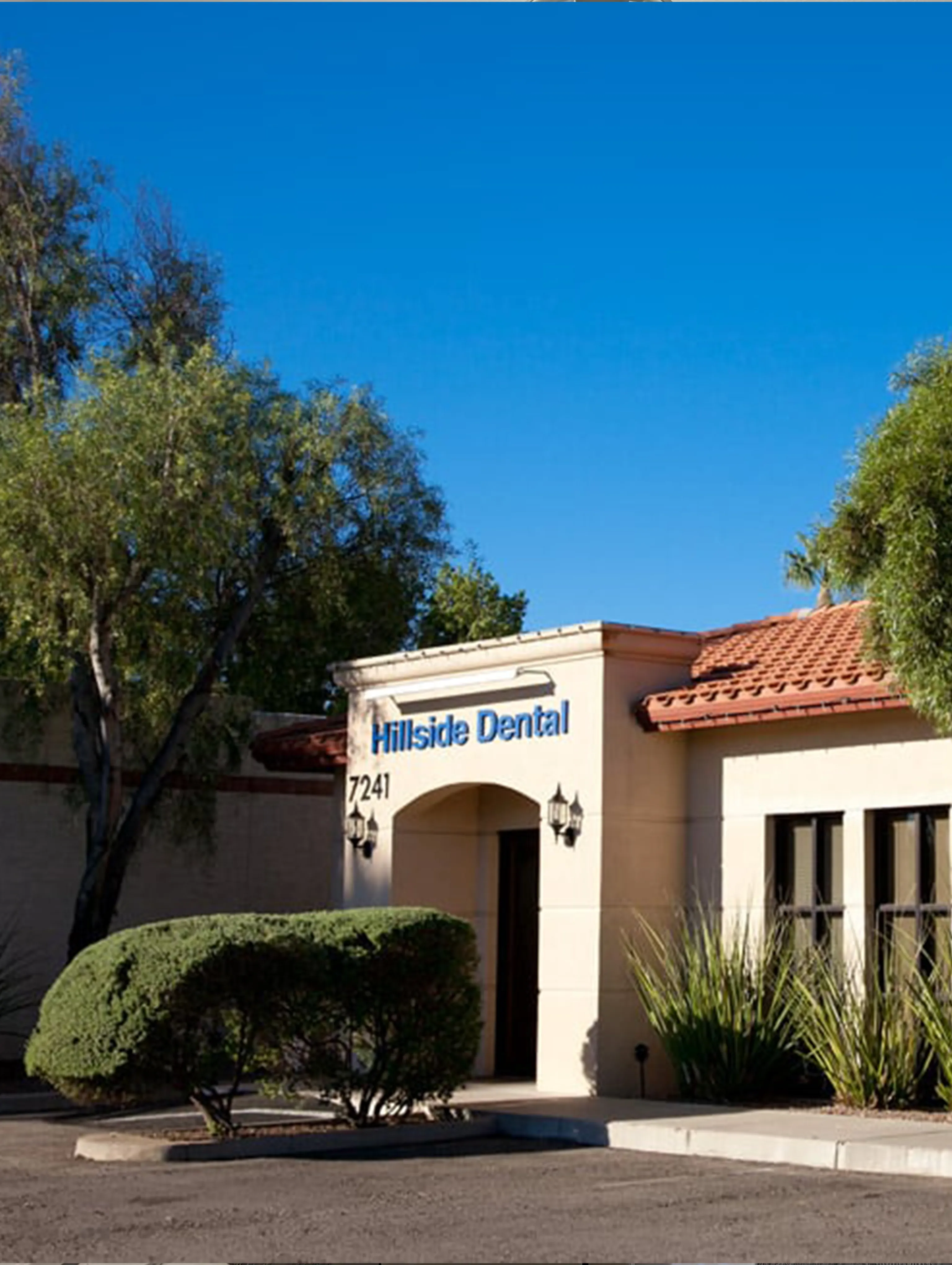
The comparisons above are a starting point, not a substitute for a clinical evaluation. Hillside Dental Care in Tucson, Arizona offers consultations to help adults assess candidacy for lingual braces, clear aligners, and traditional orthodontic options — including honest conversations about bite turbos, medication interactions, and what happens if your plans change mid-treatment.
Contact us to schedule your consultation and get a clear picture of what treatment actually looks like for your specific situation.
Medical disclaimer: This article is intended for informational purposes only and does not constitute professional dental or medical advice. Always consult a licensed dental professional for diagnosis and treatment recommendations specific to your situation.















DENTAL CARE TEAM Tucson, AZ
OUR SOCIALS
Check us out and follow our accounts on the following social media platforms