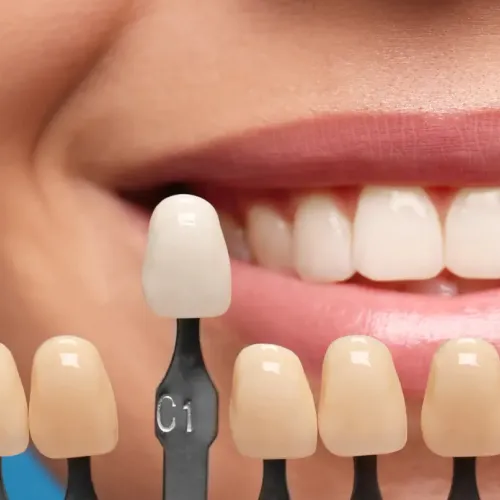
Can Teeth Rot Under Veneers? What No-Prep and Traditional Veneers Actually Do to Your Enamel
Can teeth rot under veneers? Learn how no-prep and traditional veneers affect enamel and how proper care can help protect your teeth.
Read More
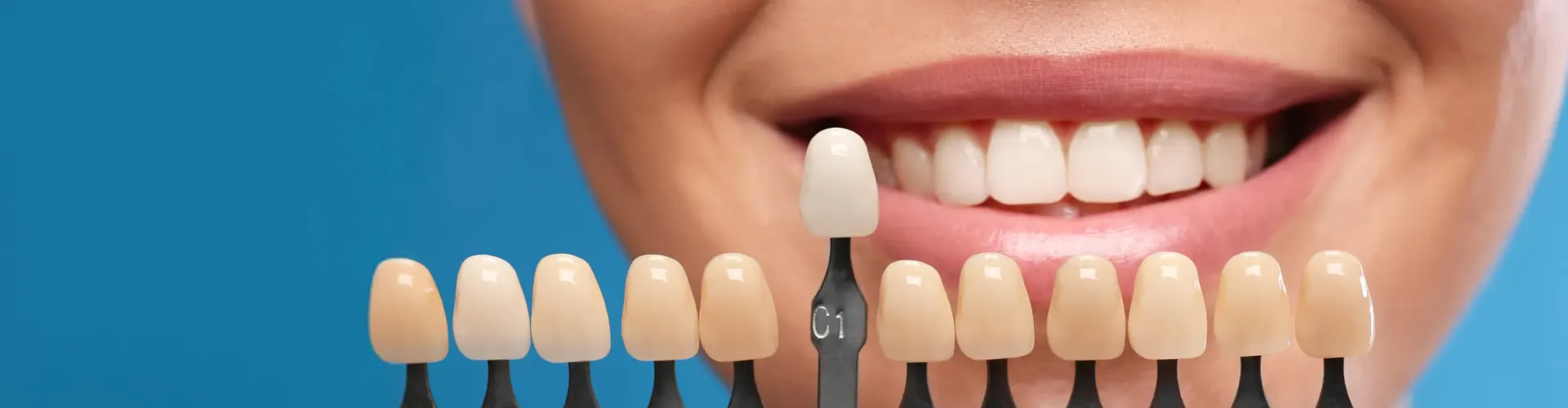
Cosmetic Dentistry
Medically Reviewed by Frank Wolf, DDS
Teeth can develop decay beneath both traditional and no-prep veneers, but the risks differ in important ways. For Tucson-area patients, no-prep veneers carry hidden structural risks most patients never hear about, and even "reversible" options leave permanent microscopic changes behind. Understanding these realities — and whether veneers are suitable for everyone — helps you make a smarter decision before committing.
No-prep veneers are often marketed as the consequence-free cosmetic option — no drilling, no enamel removal, no permanence. The appeal is obvious. But there's a detail most patients don't learn until after the procedure.
Bonding any veneer to your tooth requires phosphoric acid etching. This process microscopically roughens the enamel surface so the bonding cement adheres properly. Those enamel prisms — the crystalline rods that form your tooth's outer armor — are permanently altered at a structural level. You cannot un-etch enamel.
When no-prep veneers are eventually removed (and they will need replacement), debonding typically requires a bur or, in some offices, an Erbium laser. Neither method leaves your original enamel surface untouched. The result almost always requires follow-up composite resurfacing rather than a clean return to your natural teeth. According to a Healthline overview of no-prep veneers, while these veneers are considered semi-permanent or reversible, the procedure of installing or removing them can still affect the tooth surface.
This doesn't mean no-prep veneers are a bad choice. For the right candidate, they're genuinely excellent. But walking in with accurate expectations — that "no-prep" describes the tooth preparation, not the long-term commitment — leads to better outcomes and fewer surprises down the road.
Here's a risk that almost never appears in patient-facing content: the "ledge effect."
Traditional veneers require the dentist to remove a thin layer of enamel — roughly half a millimeter — before bonding. That reduction creates space for the ceramic so the final restoration sits flush with the natural tooth contour at the gumline. As MouthHealthy explains, the preparation process is specifically designed so the veneer fits the tooth accurately.
No-prep veneers skip that reduction step. The ceramic is added directly over the existing tooth surface, which adds 0.3mm–0.5mm of bulk. At the gumline, this creates a microscopic ledge — a cervical overhang where the veneer margin doesn't perfectly follow the natural tooth contour. That ledge traps biofilm. Bacteria accumulate in a location that's extremely difficult to clean, even with consistent brushing and flossing.
Over time, that trapped biofilm creates the conditions for subgingival caries — decay that forms at or just below the gumline, hidden beneath the veneer margin. Because the ceramic masks the area visually, this decay can progress significantly before it's caught on an X-ray or clinical exam. Patients who believe their enamel is completely preserved are sometimes surprised to learn decay has been developing in a place they couldn't see or feel. When decay advances far enough, it may even require treatment such as a root canal to save the tooth.
This doesn't eliminate no-prep veneers as an option — it underscores why the fit and margin design matter enormously, and why choosing an experienced provider makes a real clinical difference.
Traditional porcelain veneers are unambiguously permanent. Enamel removed during preparation does not regenerate. Healthline's comparison of veneers and Lumineers is direct about this: after traditional veneers, your natural tooth enamel is compromised, and there is no turning back. Traditional veneers can last 10 to 15 years on average, with some lasting up to 20 years.
But longevity doesn't mean immunity from decay. Decay under traditional veneers typically begins at the margin — the thin seam where ceramic meets tooth. Cement degrades over years of thermal cycling and chewing stress. When marginal seal breaks down, bacteria infiltrate the microscopic gap.
There are early warning signs most patients don't know to look for:
The clinical danger is that porcelain insulates the tooth. Ceramic doesn't conduct temperature or pressure the way natural enamel does, so the nerve receives muted signals. Decay can advance from early marginal washout to deep pulpitis — the stage requiring a root canal — before a patient experiences noticeable tooth pain. WebMD notes that veneers can make it harder to reach the gumline, increasing risk for gum disease and cavities in that area.
Regular dental checkups with X-rays are essential for veneer patients precisely because self-monitoring is unreliable once ceramic is covering the tooth.
The good news is that decay under veneers is preventable with the right habits and the right provider. The American Dental Association's MouthHealthy resource emphasizes that only a licensed dentist should place veneers — an unlicensed provider may unknowingly bond over teeth that already have decay or structural problems, creating a hidden crisis beneath a cosmetically flawless surface.
For patients who already have veneers, a few practices matter most:
According to WebMD's overview of dental veneers, veneers are not the right solution for teeth with active decay or gum disease — those conditions need to be resolved before any cosmetic work begins.
The foundation of any successful veneer result is healthy underlying teeth. Cosmetic dentistry works best when it's built on a clean, stable base. If you're curious about the full range of options available, discovering ways to improve your smile with cosmetic dentistry can help you understand which treatments best complement or precede veneers.
If you're considering veneers — no-prep or traditional — the most important first step is an honest conversation with a dentist who will evaluate your actual tooth health, not just your cosmetic goals.
Hillside Dental Care serves patients throughout Tucson and Southern Arizona with comprehensive cosmetic consultations designed to match the right treatment to your specific situation. Contact us to schedule your consultation and get straightforward answers about what veneers can — and can't — do for your smile.
Medical disclaimer: This article is intended for informational purposes only and does not constitute professional dental or medical advice. Always consult a licensed dentist for diagnosis and treatment recommendations specific to your oral health.



Tucson, AZ PREMIER DENTISTRY
Monday - Thu 8a - 3p
Fri - Sun Closed
7241 North Thornydale Rd
Tucson, AZ 85741
YOUR NEW DENTISTS IN Tucson
Check out what our patients are saying













EMERGENCY DENTAL CARE Tucson, AZ
Upholding the highest standards of dental excellence through our esteemed accreditations and industry affiliations

DENTAL CARE TEAM Tucson, AZ
OUR SOCIALS
Check us out and follow our accounts on the following social media platforms