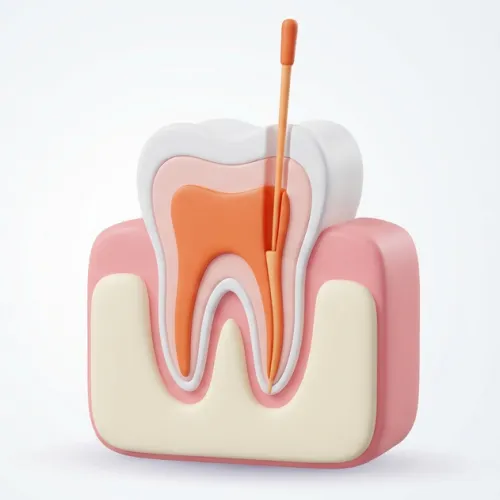
When Is a Root Canal Really Necessary to Save Your Tooth?
Wondering when a root canal is necessary to save your tooth? Compare it to extraction and pulp caps. Contact Hillside Dental Care today to book an exam!
Read More

Emergency Dentistry
Medically Reviewed by Frank Wolf, DDS
Root canals aren't always the only option — but they're often the right one. The decision between a pulp cap, root canal, or extraction depends on specific clinical findings your dentist assesses chairside. Understanding those criteria helps you ask better questions and make more confident decisions.
One of the most common concerns patients bring up is whether a root canal is being recommended when a simpler pulp cap might actually be enough. It's a fair question — and the answer comes down to what happens inside the tooth during the procedure. For Tucson-area patients exploring their options, learning how you can save your tooth with a root canal can help you understand when the procedure is truly necessary.
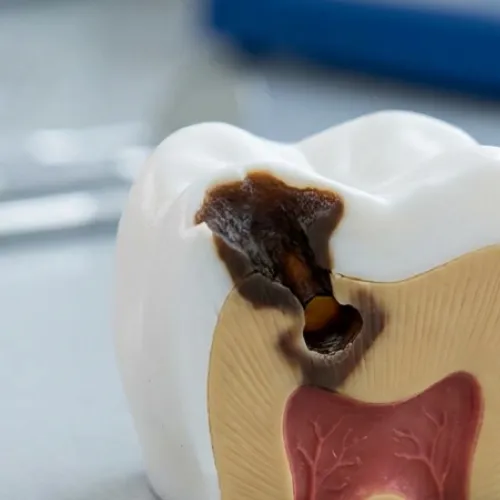
When decay is removed and the pulp becomes exposed, a dentist evaluates whether the tissue is still healthy enough to heal. The key clinical signal is bleeding behavior. If bleeding from the exposed pulp stops within roughly two to five minutes under a sodium hypochlorite pellet, that controlled response suggests reversible pulpitis — meaning the pulp is still vital and capable of recovery. In this scenario, placing a biocompatible material like mineral trioxide aggregate (MTA) directly over the exposure may preserve the tooth without a root canal. This is called direct pulp capping.
If, however, bleeding is uncontrolled and the patient reports cold sensitivity lasting longer than 30 seconds, the pulp has likely crossed into irreversible pulpitis. No capping material can reverse that. Proceeding with a pulp cap under those conditions risks a necrotic abscess — which means more pain, more treatment, and a worse outcome than if a root canal had been done initially.
A Healthline overview of root canal alternatives notes that direct pulp capping is typically only appropriate when the exposure is minimal and the pulp shows no signs of inflammation. Age also matters — younger patients with more robust pulp tissue tend to respond better.
There's also indirect pulp capping, used when decay is close to — but hasn't yet reached — the pulp. Healthline's overview of indirect pulp capping explains this can be done in one or two appointments, with the goal of protecting the pulp while allowing the tooth environment to stabilize. If the pulp stays protected and infection-free, more invasive treatment may be avoided entirely.
The bottom line: pulp caps are real, evidence-based alternatives — but only when specific intra-operative criteria are met.
Root canals get a bad reputation they mostly don't deserve. Harvard Health points out that modern anesthetics and technique improvements have made root canal treatment no more uncomfortable than a routine filling. The real question isn't whether it hurts — it's whether it's the right procedure for your specific tooth.
The strongest case for a root canal over extraction is structural: if there's enough healthy tooth structure remaining above the gumline, saving the tooth preserves your bite, bone density, and the spacing of neighboring teeth. Extraction removes all of that in one appointment.
But there's a critical anatomical limit that many patients never hear about: the ferrule requirement. For a dental crown to hold long-term after a root canal, there must be approximately 1.5 to 2.0mm of sound, natural tooth structure above the gumline for the crown margin to grip. This is called the ferrule effect. Without it, the crown has no mechanical anchor — it will shear off under normal chewing forces, often within a couple of years.
This matters enormously in treatment planning. If a tooth has deep subgingival decay or fractures below the bone level, a root canal may be technically possible but clinically pointless. The nerve could be treated perfectly, the canals sealed flawlessly — and the restoration will still fail because the crown has nowhere to attach. In those cases, extraction followed by an implant is the more sound long-term investment.
Healthline's comparison of root canals and implants frames this well: the decision requires weighing the condition of the remaining tooth structure alongside the type of restoration needed afterward.
Not all teeth carry equal weight — literally. Your first molars bear the majority of chewing force. Losing a first molar and leaving the space empty sets off a chain reaction: the opposing tooth begins to supra-erupt (drift downward or upward into the gap), neighboring teeth tilt into the space, and the bite gradually collapses. This process can unfold over two to three years without noticeable symptoms, until the structural damage reaches a point requiring orthodontic correction or complex restorative work.
Second molars are a different calculation. Because they sit further back and share chewing load with the first molar, extraction without replacement is sometimes a clinically acceptable option — if the opposing tooth is monitored regularly for supra-eruption. This isn't a decision to make casually or to avoid a follow-up appointment. The opposing tooth needs periodic X-rays and clinical checks to catch early drift before it becomes a bite problem.
The AAPD's guidelines on pulp therapy reinforce a principle that applies across all posterior teeth: preserving pulp vitality — and by extension, the tooth itself — is always the primary goal when clinical conditions support it. Extraction is a one-way door.
If you're debating extracting a back molar to avoid the complexity of a root canal and crown, discuss the supra-eruption risk explicitly with your dentist. The short-term simplicity of extraction can quietly generate a much larger restorative problem down the road. Understanding tooth extractions and what they involve can help you weigh that decision more carefully.
The root canal vs. pulp cap vs. extraction decision isn't made from a price list or a general preference — it's made from clinical findings: pulp vitality testing, bleeding response, X-ray evidence of infection, available tooth structure above the gumline, and which tooth is involved.
If you're facing this decision, the most useful thing you can do is ask your dentist to walk through the specific findings driving the recommendation. Is the pulp still vital? Is there enough ferrule for a crown to succeed? Which tooth is it, and what happens to the opposing tooth if it's extracted? If tooth pain has been your primary concern, it's also worth exploring the causes and relief for tooth pain to better understand what your symptoms may indicate.
Those questions lead to better decisions — and better long-term outcomes.
If you've been told you may need a root canal — or you're weighing whether extraction makes more sense — Hillside Dental Care is here to help you understand your options clearly. We serve patients throughout Tucson and Southern Arizona with thorough evaluations and straightforward guidance. Keeping up with routine prophylaxis cleanings is one of the best ways to catch problems early before they reach this stage. Reach out to schedule a consultation and get the specific answers your situation requires.
Medical disclaimer: This article is intended for general informational purposes only and does not constitute professional dental or medical advice. Always consult a licensed dental provider for diagnosis and treatment recommendations specific to your situation.







Tucson, AZ PREMIER DENTISTRY
Monday - Thu 8a - 3p
Fri - Sun Closed
7241 North Thornydale Rd
Tucson, AZ 85741
YOUR NEW DENTISTS IN Tucson
Check out what our patients are saying













EMERGENCY DENTAL CARE Tucson, AZ
Upholding the highest standards of dental excellence through our esteemed accreditations and industry affiliations

DENTAL CARE TEAM Tucson, AZ
OUR SOCIALS
Check us out and follow our accounts on the following social media platforms