Medically Reviewed by Frank Wolf, DDS
A smile makeover isn't one-size-fits-all — the right candidate depends on your age, bone health, bite habits, and even how your face has changed over time. This guide helps you understand the clinical factors that determine whether whitening, veneers, bonding, or orthodontics is the right starting point for you.
Your Face Ages — And Your Smile Makeover Plan Should Account for That
Most people researching smile makeovers focus on tooth color or shape. For Tucson-area patients, what almost nobody talks about is how facial aging changes the entire equation — especially for patients in their 40s, 50s, and beyond. If you're exploring your options, it helps to first discover ways to improve your smile with cosmetic dentistry so you understand the full range of treatments available.
Here's the clinical reality: as you age, your upper lip loses elasticity and gradually drops. This hides more of your upper front teeth and exposes more of your lower teeth. Dentists measure something called incisal display at rest — how much of your upper tooth shows when your lips are relaxed and your mouth is slightly open. In your 20s, you might show 3–4 mm of upper tooth at rest. By your 50s, that display can shrink to nearly zero.
This matters enormously for makeover candidacy. A cosmetic dentist designing a smile for a 55-year-old needs to account for upper lip support — the thickness and length of veneers or crowns can physically prop the lip outward and upward, producing a subtle rejuvenating effect that no topical treatment can replicate. Choosing tooth lengths appropriate for a 25-year-old on a 55-year-old patient produces an unnaturally "toothy" result. The reverse — using short, conservative restorations on an aging patient — leaves the lip unsupported and can actually make the face look older.
As Cleveland Clinic explains, cosmetic dentistry aims to create balance and symmetry — and for mature patients, that balance must factor in lip position and facial structure, not just the teeth themselves.
Good candidates in their 40s and 50s are often those whose worn or shortened teeth have contributed to a "sunken" lip appearance. Restoring proper tooth length doesn't just improve the smile — it can restore facial volume lost over years of wear.
If Your Teeth Are Worn Down, Rule Out Grinding First
Severely chipped, flattened, or short teeth are one of the most common reasons people seek a smile makeover. But worn teeth aren't always a cosmetic problem — they're often a symptom of bruxism (nighttime teeth grinding), which can itself be linked to underlying sleep apnea or chronic stress.
This is a critical candidacy filter that most articles skip entirely. If you invest in porcelain veneers or bonding without addressing active grinding, you will likely fracture or debond those restorations within months.
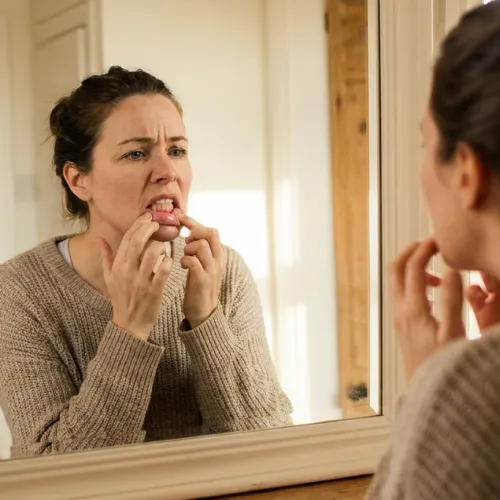
A quick self-assessment: Do you wake up with jaw soreness or headaches? Has a partner ever told you that you grind your teeth at night? Do you notice your teeth feel sensitive or "flat" in the morning? Do you have unexplained chipping across multiple teeth — especially the lower front teeth? If several of these apply, bruxism may be your underlying issue. Tooth pain from grinding can also be a warning sign — learning to discover causes and relief for tooth pain can help you identify whether grinding is contributing to your discomfort.
According to WebMD's cosmetic dentistry overview, bonding is more likely than other restorations to chip or wear down — making it a poor standalone choice for active grinders. Porcelain veneers carry similar risks under heavy occlusal force.
The good news: grinders can be excellent smile makeover candidates with the right protocol. High-strength monolithic zirconia restorations resist fracture far better than traditional feldspathic porcelain. And any patient with confirmed bruxism should commit to wearing a custom nightguard after treatment. Addressing the grinding — or protecting against it — is what separates a successful makeover from an expensive disappointment.
Age Isn't Just a Number — It's a Candidacy Variable
One of the most counterintuitive candidacy rules involves younger patients. A 22-year-old with slightly crooked teeth who wants veneers may actually be a poor immediate candidate — not because their teeth aren't healthy, but because placing veneers on young, healthy enamel requires removing tooth structure that can never be replaced. That's a significant biological cost early in life.
Healthline's guide to dental veneers notes that applying traditional veneers involves grinding down the tooth structure — sometimes past the enamel — making it an irreversible procedure. For a 22-year-old, the better path is typically orthodontics first (clear aligners like Invisalign work well here), followed by conservative cosmetic bonding if any minor shape or color corrections are still needed. Understanding whether veneers are suitable for everyone is an important step before committing to that treatment path.
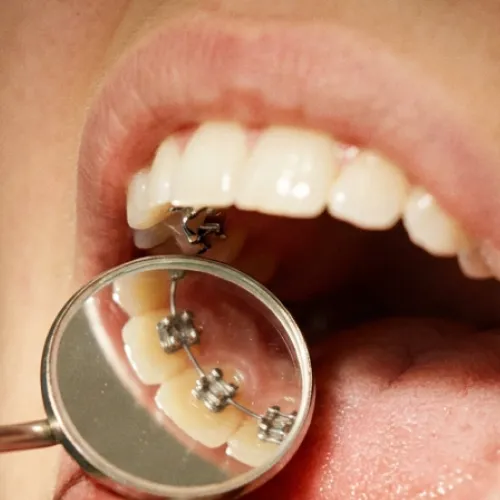
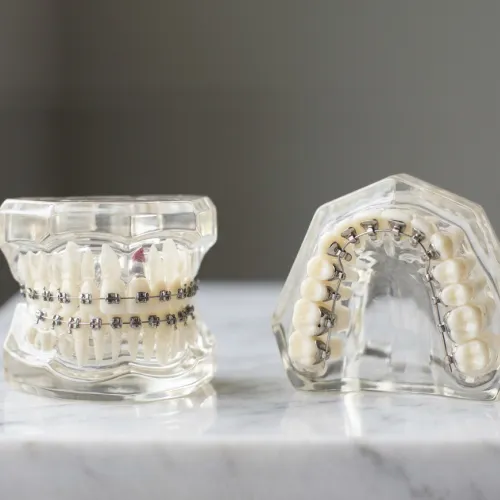
Conversely, a 60-year-old patient often assumes they're too old for orthodontics and jumps straight to crowns. But patients with stable bone density and healthy periodontal tissue are frequently excellent candidates for minor adult orthodontic alignment before cosmetic work — preserving more natural tooth structure in the long run.
The American Dental Association's MouthHealthy resource confirms that adult braces — including removable aligners — are a well-established option for straightening crooked or crowded teeth at any age.
The real question isn't how old you are. It's whether your jawbone density, gum health, and bite are stable enough to support whichever procedure makes the most biological sense for your specific teeth.
The Baseline Checklist: What Makes Someone Ready
Beyond the nuanced factors above, there are foundational criteria every smile makeover candidate should meet before moving forward:
- Healthy gums. Active gum disease must be treated before any cosmetic work begins. Cosmetic procedures on inflamed tissue produce unpredictable results. Routine prophylaxis cleanings are vital for your oral health and help ensure your gums are in the best possible condition before any makeover begins.
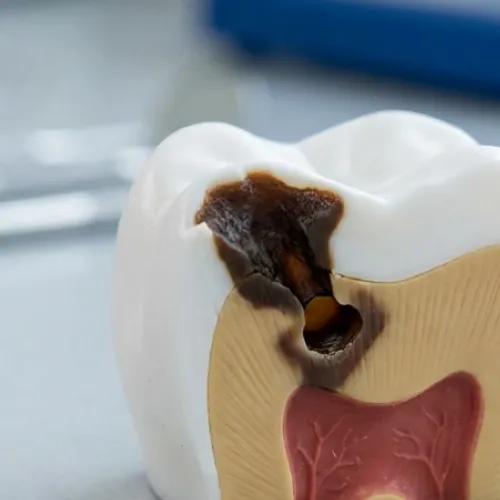
- No untreated decay. Cavities need to be addressed first. Placing a veneer over a compromised tooth accelerates damage.
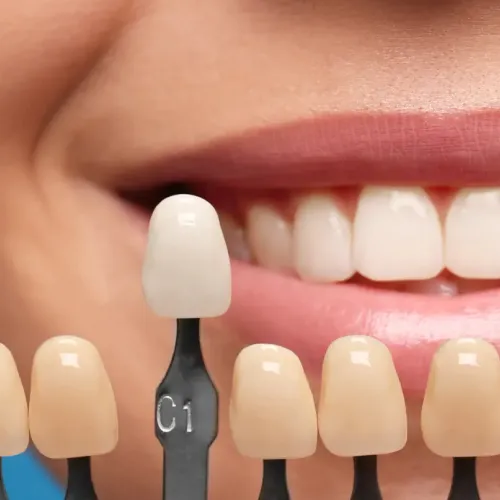
- Realistic expectations. A Healthline overview of composite veneers notes that results vary significantly based on the procedure chosen and how well patients maintain their oral hygiene afterward.
- Commitment to maintenance. Whitening, bonding, and veneers all require ongoing care — consistent brushing, flossing, and regular dental visits.
The best candidates aren't necessarily those with the "worst" teeth. They're patients who understand what each procedure can and cannot do, have addressed any underlying oral health issues, and have realistic goals aligned with their facial structure and age.
Ready to Find Out If You're a Candidate?
The only way to know for certain is a consultation with a cosmetic dentist who evaluates your full picture — not just your teeth, but your bite, bone health, facial structure, and long-term goals. If you're considering options like dental crowns in Tucson AZ as part of your makeover plan, understanding how they fit into the bigger picture is a great place to start.
Hillside Dental Care serves patients throughout Tucson and Southern Arizona who are exploring smile makeover options. Whether you're wondering about veneers, bonding, whitening, or a full smile redesign, our team can help you understand exactly where you stand — and what path makes the most sense for your biology, not just your timeline.
Medical disclaimer: This article is intended for informational purposes only and does not constitute medical or dental advice. Always consult a licensed dental professional for diagnosis and personalized treatment recommendations.

















DENTAL CARE TEAM Tucson, AZ
OUR SOCIALS
Check us out and follow our accounts on the following social media platforms