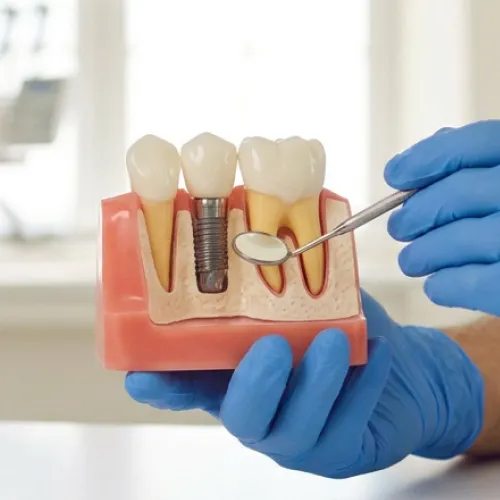
Should You Get a Dental Implant or a Bridge for Missing Teeth?
Choosing between a dental implant or bridge? Compare pain, longevity, and costs to make the right choice for your smile. Book your consultation today!
Read More
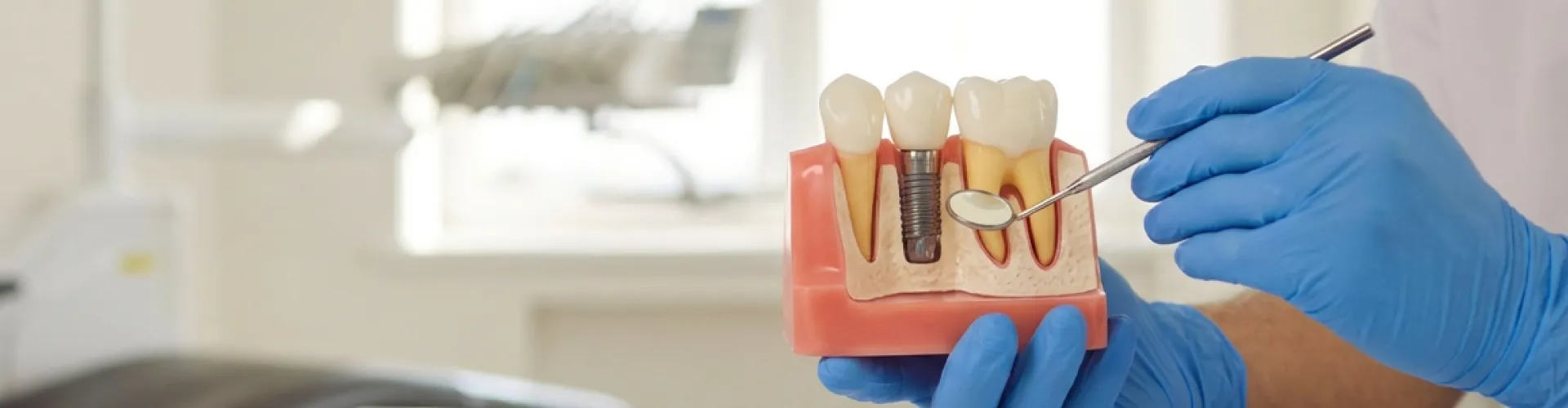
Restorative Dentistry
Medically Reviewed by Frank Wolf, DDS
Dental implants and bridges both restore missing teeth, but the right choice depends on the condition of your surrounding teeth, your medical history, and how each option holds up over time. Understanding the real differences — including some counterintuitive ones — helps you have a more informed conversation with your dentist. If you're also exploring cosmetic dentistry in Tucson AZ, tooth replacement is often one piece of a broader smile restoration plan.
Most people assume dentists recommend bridges only when a patient cannot receive an implant. The reality is more nuanced — and sometimes a bridge is the biologically superior option.
Consider the teeth flanking the gap. If those adjacent teeth already carry large composite fillings, recurrent decay, or aging crowns that need replacement anyway, incorporating them into a bridge framework stabilizes compromised teeth without sacrificing anything that wasn't already at risk. In that scenario, a bridge solves two problems at once. Understanding dental crowns in Tucson AZ can help clarify how the abutment teeth in a bridge are prepared and capped as part of this process.
There are also medical situations where implant surgery carries serious risk. Patients taking antiresorptive medications — such as bisphosphonates like Fosamax or denosumab (Prolia) — face an elevated risk of Medication-Related Osteonecrosis of the Jaw (MRONJ) following any procedure that disrupts jawbone tissue. For these patients, a bridge avoids that risk entirely. Similarly, patients who have received radiation therapy to the head and neck, or those whose anatomy places the gap dangerously close to the inferior alveolar nerve or maxillary sinus, may not be candidates for implant placement without extensive preparatory surgery.
According to Harvard Health, a bridge is also a practical option when there simply isn't enough room for an implant — the Maryland bridge variant, for instance, is specifically designed for single-tooth replacement in the front of the mouth under those constraints.
The takeaway: when your dentist leans toward a bridge, it's worth asking why. The answer is often a clinical reason that genuinely favors it.
Patients consistently assume that drilling into the jawbone for an implant must be more painful than grinding down two teeth for a bridge. The neuroscience tells a different story.
Alveolar bone — the jawbone ridge that holds your teeth — has very limited nociceptor (pain-sensing nerve) density compared to soft tissue. During implant surgery, local anesthesia numbs the area thoroughly, and as Healthline explains, post-operative discomfort typically resolves within three to five days and is often managed with over-the-counter medications. What patients feel afterward is largely a dull muscular ache and mild swelling — not sharp, acute pain. Patients with significant dental anxiety may want to explore sedation dentistry in Tucson AZ to make either procedure more comfortable.
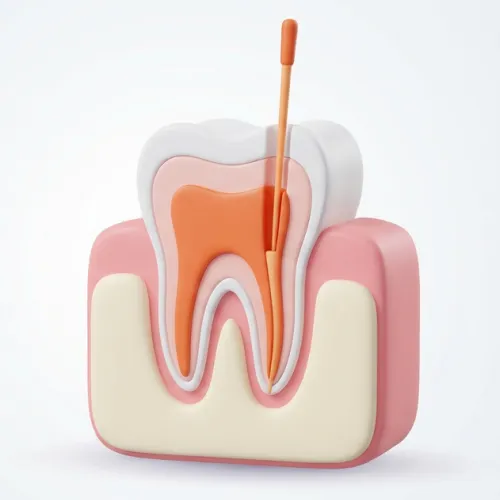
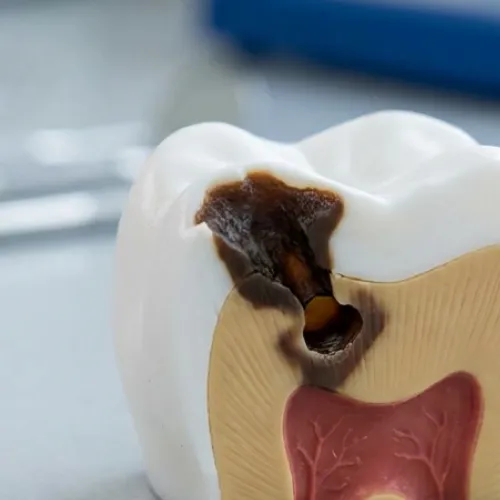
Bridge preparation works differently. Shaving down healthy enamel on two abutment teeth cuts through thousands of dentinal tubules — microscopic channels that run directly toward the nerve of each tooth. This exposure can trigger acute thermal sensitivity and, in some cases, pulpal inflammation (a condition known as pulpitis) that lingers for weeks. In irreversible cases, it may eventually require a root canal on a tooth that was perfectly healthy before the bridge procedure began. If you're facing that outcome, it helps to discover how you can save your tooth with a root canal in Tucson AZ before the situation worsens.
WebMD notes that bridges require crowning the natural teeth on either side of the gap, which is precisely the step that introduces this risk. Patients who experience sharp sensitivity to hot or cold beverages weeks after getting a bridge are often surprised — they expected the implant candidate to be the painful one.
Neither procedure is without discomfort. But the type of discomfort differs in ways that matter clinically, and bridge-related dental nerve sensitivity is frequently underestimated going in.
Generic longevity comparisons say bridges last 5–15 years while implants can last 15 years or more. What those numbers don't capture is how each option fails — and the downstream consequences are dramatically different.
A Healthline overview of dental implants reports implant survival rates above 94% at 15 years. When an implant does fail, the failure is localized — typically the implant itself, or the crown above it. The adjacent teeth are untouched. The problem stays contained to one site. For a deeper look at what's involved when a crown needs attention, the answers to common questions about dental crowns in Tucson AZ cover the most frequent patient concerns.
Bridge failure follows a different pattern. The most common cause is recurrent decay developing beneath the margins of the crowns on the abutment teeth. Because those teeth are fully capped and harder to clean at the margins, decay can quietly progress until it reaches the pulp — often requiring root canals or, in worse cases, extraction. A single missing tooth that was treated with a bridge can become a three-tooth gap when the bridge fails, along with significant restorative work on what were originally healthy anchor teeth. In scenarios where multiple teeth are ultimately lost, dentures in Tucson AZ may become part of the conversation.
According to WebMD, bridges generally last 5–15 years before needing replacement. Each replacement cycle restarts that decay-risk clock on the abutment teeth. Over a 15-year horizon, a patient may face multiple bridge replacements plus downstream restorative work on anchor teeth — a compounding problem that an implant, by design, avoids entirely.
The implant's higher upfront complexity often looks different when weighed against the total burden of bridge maintenance and the risk of collateral tooth loss over time.
Every missing tooth situation is different — and the right answer depends on your specific anatomy, medical history, and the condition of your surrounding teeth. The information here is a starting point, not a prescription.
At Hillside Dental Care, our team works with patients across Tucson to evaluate both options honestly and recommend what's genuinely best for your long-term oral health. If you'd like to understand more about tooth extractions in Tucson AZ and how they factor into your treatment plan, that's a great topic to bring up during your consultation. Reach out to schedule a consultation and get a personalized treatment plan.
Medical disclaimer: This article is for informational purposes only and does not constitute medical or dental advice. Always consult a licensed dental professional for diagnosis and treatment recommendations specific to your situation.








Tucson, AZ PREMIER DENTISTRY
Monday - Thu 8a - 3p
Fri - Sun Closed
7241 North Thornydale Rd
Tucson, AZ 85741
YOUR NEW DENTISTS IN Tucson
Check out what our patients are saying













EMERGENCY DENTAL CARE Tucson, AZ
Upholding the highest standards of dental excellence through our esteemed accreditations and industry affiliations


DENTAL CARE TEAM Tucson, AZ
OUR SOCIALS
Check us out and follow our accounts on the following social media platforms